Supernatural Romance and the Power of the Other: Disney’s The Little Mermaid

In a lot of romances, the women are the mortals and the men immortals: vampires, werewolves, angels, demons. Yes, there are some really cool books where the women are magical and fall in love with mortal men, but these aren’t as common. The mainstream idea is that women fall in love with magical men. Or maybe that women gain the love of magical men.

.

.

Erik the Romance Seeker

In Disney’s The Little Mermaid, Ariel – for the case of this blog post – will be positioned as the magical/immortal woman. She’s an Other to Erik’s human. Erik is the one in this romance concerned with finding a wife: he’s pressured by his adviser and presumably his parents to get married – not necessarily be happy or fall in love. And Erik, feeling the pressure, obsesses over Ariel’s unearthly voice, and vows to marry the girl it belongs to. He’s pressured to find a wife because he is royalty and needs to produce an heir – he’s not chasing a romance because it will make him complete, but because it is his duty.

image
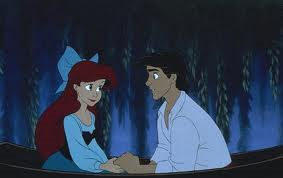
This is why he is too afraid to KISS THE GOD DAMNED GIRL ALREADY!

In one way of looking at it, this could be Erik’s way of resisting marriage. Sure, he wants to marry the girl the voice belongs to, much like Cinderella’s Prince wants to marry the girl the glass slipper belongs to, but he may never find her. If he vows to only marry that girl, and he can’t find her, then he doesn’t have to get married. But maybe that’s the cynic in me .

Ariel’s Sacrifice To Otherness

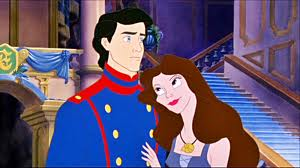
In contrast to Eric, Ariel is shown as having outside interests other than her romance. She’s obsessed with everything human because it’s so exotic to her. She’s not an Other in her own world, but she’s an Other to the human world. She wants to be a part of the exotic world so much that she is willing to trade her voice and ultimately put her life at risk to get what she wants. Ariel shows a distinct interest in the human world before she discovers Eric, and her voice is the defining aspect of her identity: so much so that Ursula can use her voice to hypnotise Prince Erik.

image
He's so dreamy... literally.

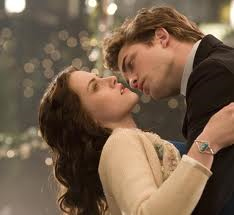
When comparing this other romance women who are offered a chance at getting everything, I find the other women lacking. Often they don’t have to sacrifice anything. Or it’s something paltry – like sacrificing being with their family in exchange for getting their spouse’s family and life, wealth and prosperity. Even Bella Swan, of Twilight fame, thinks she is giving up something monumental to be with rich, handsome Edward. Whether it is her family (which she doesn’t end up abandoning at all) or her soul (it is never finalised whether vampires have souls or not), Bella does not sacrifice as much as Ariel does to get what she wants. She kind of falls into her role as Edward’s wife, whereas Ariel actually fights for her destiny. Bella certainly never gives up any aspect of her identity, for she never really has enough of a personality or ability to sacrifice in the first place.

image
Go on, bite her. End her miserable existence.

Yes, I am bashing Twilight again – so what? YOU LOVE IT.

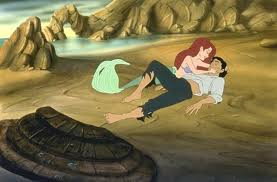
image
Now THAT is the kind of thing I like to see. Woman rescues man. Or post-pubescent girl-like fish-thing rescues handsome prince. If you wanna get technical.

Another monumental difference I want to point out is that Ariel wants nothing more than to be a human. Sure, being human is hugely different an exotic to her, but Bella wants so much more: Bella wants to be an immortal vampire with magical powers; Ariel simply wants to be human and all the problems and flaws that come along with that. Bella gives up her normalness to become an Other, while Ariel gives up her Otherness to become normal.

Ursula’s Power And Otherness

Ursula is an Other even within the underwater world. We don’t know what she did to be called a ‘demon’ and untrusted. We do know however that she openly rebels against the Sea King, Triton, and that it might be because she is both a powerful woman and an othertype of human-fish hybrid: an octopus. She rebels against Triton’s patriarchal hierarchy by using her power, in a sneaky way, to give others what they want. But her payments – and she has the right to be paid, for not only is she a businesswoman but apparently knows something about contract law – often allow her to take possession of the victim. What her ultimate goal in collecting them is, I can’t figure out. I do know, however, that her ultimate goal is taking Triton’s power – in a way, castrating him – and ruling the sea.

image
I had to put this iconic picture in SOMEWHERE.

The thing about Ursula is that she’s obviously grotesque – mostly because she is grossly overweight and also an octopus – yet for some reason the film makers show us her vanity – she is seen adjusting her hair and applying lipstick. She’s camp and knowledgeable about sexuality, and also kinda dirty when talking to Ariel about getting her man and singing a song with obvious sexual undertones. Ursula is also the most provocative of all the characters we meet. She often slips into sexy poses and uses her breasts and hips to make a point. Her octopus body is reminiscent of a black evening gown, and she wears make-up (although I can’t figure out what she’s using).

image
Why doesn't Ursula get a sea-shell bra? Is she too old to bare her midriff?

This is in direct contrast to Ariel’s innocence and purity – although Ariel was deliberately drawn to enhance her cleavage, she doesn’t wear make-up or take much pride in her natural appearance, nor does she seem aware of any kind of sexuality beyond kissing – which, according to Ursula, is ‘true love’. Now, Ursula’s clearly older and more worldly than Ariel, and obviously taking advantage of teenage hormones – but it’s her contrast to beautiful, sweet-voiced and good-natured Ariel that gets me. Even her skin is purple! What’s up with that?

image
Seriously, what is up with mauve skin? Was it the 'in' thing in the 80s? I must have missed that memo.

In the end, it’s Eric who has to destroy Ursula with a rather phallic-like symbol, therefore regaining the patriarchal ideal. In my opinion, this is because Ariel has already saved Eric’s life several times, so it’s his damn turn. Triton hands Ariel over to her new husband, and all is well in the world.

image
Happily ever after... if you don't include the sequel.

Seven Deadly Sins Flash Fiction Challenge

Antimony of Thoughts, Musings and Broken Promises is hosting a flash fiction blogging challenge. The premise is such:
Seven Days
Seven Deadly Sins
Seven Flash Fictions up to 100 words
Starting 7/7

Does this not sound like one of the most awesomest challenges ever?

Because I’m querying one series with two books written so far, and editing my sci-fi and short story collection, this is perfect to get me back into writing.

I’ve only ever written one flash fiction before, and that was autobiography. I tend to write quite a bit to get my point across (as you might be able to tell) so having this 100 word limit is going to be quite a challenge. I’m also kind of obsessed with the seven deadly sins. This sounds perfect for me.

Write What You Love Or What Will Sell?

A few of the blogs I’ve read recently have started saying things like, “The most important thing to a writer is a reader,” and “You must write what will sell,” and “You must write what will appeal to a reader or you will never sell anything and you’ll be a FAILURE!”

That’s great if you’re looking to be the next Stephen King or Danielle Steele, and never have a novel that differentiates too much from what you’ve already written and sold.

But where’s the heart, the soul, and the passion of a writer who isn’t writing what they love?

The books that are written to a trend are obvious to savvy readers. Maybe the agents and publishers think we’re stupid, but we can tell when someone’s trying to rip off Twilight or Harry Potter and quite frankly, I’m not impressed. The rip offs will never be as good as the original and sure, some people might be duped into parting with their hard earned cash; but in the long run, they’re missing something. An essence. A passion. Love. Call it what you will, but trend-written books are never as good as originals.

So what do you do? Do you write to trends and turn out a bunch of similar novels that can never compare to the original (oh my god, where do I start!), or do you write what you want to write, write something that makes you excited and hope that a similar trend comes along in time to take advantage of that enormous wave of popularity?

Of course, I don’t have the answers, because I’m not a published writer. In fact, I’ve done both. I’ve written a short story collection of some generic paranormal tropes such as werewolves, vampires, fairies, angels, and sirens – but my full-length novels are a space opera about cyborgs and a high fantasy/paranormal series about magical creatures no one’s ever written about before. If I ever write something trendy, it will be by accident.

What are your thoughts? Would you ever write to a trend – considering it takes 2 years for a book to go from bought by a publisher to on the shelves? Or would you write to a trend and self-publish (faster turnaround)? Do you only write what you’re interested in reading, like Meyer did with Twilight? Do you hope a trend might come along that you can surf the success of?

What Do YOU Want To Read?

Hi Followers.

I noticed a big spike in readers and commenters when I  posted “When Did Gaston Become ‘The One’?”, which has quickly become my favourite post I’ve written so far. Other posts I got the most views/comments on are the blog contests posts “The Power of Tension” and “First 250 words of Dadewalker”. That, however, did not bring about a lot of returning readers – although I do know which ones of you are here because of those contests, and I thank you *waves enthusiastically*. My personal favourite, second only to the Gaston post, was “Authors Need Editors: Doctor Who as Author, Companions as Editors”, although that one wasn’t as popular as I had hoped it might be. Maybe because I was talking about a previous Doctor. I dunno.

imageI have a particular strength in taking two unrelated concepts and making them correlate. That’s what my Honours thesis was about: gender and power in two seemingly unrelated cross-dressing film versions of Shakespeare plays. The whole title is “Who Wears the Pants: Gender and Power in Trevor Nunn’s Twelfth Night and Michael Radford’s The Merchant of Venice“. That’s what I enjoy doing, and why the Gaston and Dr Who posts were my favourite to write – even though I still had to research what I was saying.

I have particular interests in Shakespeare, and gender roles and representation in media. I like to knit (but nothing fancy) and cook – although my partner does most of the cooking, I do bake a lot. I like video games, but I’m only a casual gamer. I’m a classically trained singer and I like musicals, symphonic metal, and Disney. If I ever went back to Uni to do my Masters or a PhD, I’d like to do it on the Disney Renaissance Princesses.image

Basically, I like other things apart from writing. But in trying to make this blog about things other than writing, I’m not sure where to turn. I don’t want to keep going on about my projects because quite frankly, that could get boring quickly, and when I’m editing three books and querying a fourth, there’s not much to talk about. I don’t want to seem desperate, only talking about my work.

So what do you, my lovely, gorgeous return readers, want to read about?

Inherent Toughness in Girl Warriors: The Girls of The Last Airbender

This post is about the TV series, not the film, and contain spoilers.Avatar: The Last Airbender, also known as The Legend of Aang, is my favourite children’s TV series. Having watched the entire series recently with my partner, I rediscovered my absolute love for this show and now feel the need to gush about how awesome their female characters are. No wilting helpless damsels here! (Well OK, maybe just one.)

Katara

Katara is the only waterbender left in the Southern Water Tribe. When the series starts, she’s not even a very good bender. After she receives training at the end of season one, she becomes arguably the best waterbender in the world. She surpassed Aang’s waterbending, even when she was only a beginner and Aang had a lot more power than her. She became Aang’s teacher.

image

I love Katara because she very easily finds the balance between being motherly and being a kick-ass warrior. Even though the waterbenders are modelled on Tai Chi, and their bending is more about using their opponent’s power against them, waterbenders can become very powerful. They also have the ability to bend water into ice and vice versa, and as a bonus, can also heal. At first, when Katara reaches the Northern Water Tribe, she is told that healing is women’s work and she’s not allowed to learn combat. This angers both her and Aang (and just about everyone who watches it) because we already know she’s a more than capable warrior. Later, she also learns to embrace her healing.

image

To me, Katara is a perfect meld of feminine attributes and a less traditional feminine approach. She’s so resourceful that she even learns to bend water out of thin air and take the water from plants around her. In the end, she succumbs to the horrifying magic of bloodbending, which is a power she first refused but then embraced to save her friends. As Katara adjusts to her new all-powerful status, she begins to embrace her anger and eventually she and Zuko go off to find the Southern Raider who killed her mother. While Katara embraces her massive power, in the end she decides to let the man go. She finds the balance with her supreme power, and doesn’t let it go to her head. For that, I admire her.

Toph

Toph is the strongest, best earthbender in the world, and the least girly girl in the entire show, but she thinks it’s fine to be that way because she’s blind and doesn’t care for physical appearances. One of the best things about Toph is that appearances mean so little to her: she develops this crush on Sokka because he’s hilariously funny, not because he’s cute. Toph doesn’t care about her appearance or even very much about her hygiene – she works with earth all day and is often covered in dust. When she and Katara take a girly day in the Tales of Ba Sing Se, she confesses to Katara that it’s nice to be girly for a change but it’s not who she really is. As some spoiled rich bimbos walk by and taunt her for looking ridiculous, Toph does what she does best – her earthbending. She knocks the girls into the river and Katara washes them away.

image

One of my favourite Toph moments is when she stops the library from sinking. Toph hates sand because it makes her feeling-vision look fuzzy. She had to make a very difficult choice between saving Appa and saving everyone else. Aang, understandably, is very upset. Toph doesn’t cry much (not like Katara) but you can tell how upset she is at losing Appa. She is so strong in that moment, and you realise just how good she is at earthbending.

image

When Toph is shown in the Ember Island Players’ version of Avatar events, she’s represented by a big, burly bloke, who says his name is Toph because it sounds like ‘tough’. Toph thinks it’s cool to be cast as a man, but I think it’s interesting more than anything else. Toph is so tough, stubborn, and unmoveable that it’s seen to be unfeminine. The Players believe Toph is a man just because she’s so tough. But she’s not. She’s a very tough blind little girl who often punches people to show affection and never lets anyone push her around. She’s admirable. She may be a tom boy, but she still enjoys her girly time with Katara. It’s interesting that the play within the show made her a man, because she has many attributes that are seen as traditionally masculine.

Suki

What can I say about Suki that isn’t totally gushing? Nothing. I love her to bits.

image

Suki is an Earth Kingdom citizen and a highly trained Kyoshi warrior – named after the island on which she lives and is trained, and also after Avatar Kyoshi, the first female Avatar that we learn about. She is so incredibly amazing, as the Kyoshi warriors are trained to use weapons and stealth. She’s physically agile, but she’ not gifted with bending powers. Suki and the other Kyoshi warriors teach us that you don’t need bending to become a great warrior. Suki’s introductory episode shows us the worst side of Sokka (and even though he’s my favourite character, I hate him in this episode). Early on, Sokka believes very strongly in the distribution of women’s work and men’s work. He can’t believe that a ‘bunch of girls’ are better warriors than him. In the end, he learns from his mistake and begs Suki to teach him. It’s interesting to note that the Kyoshi warriors wear clothing that strongly resembles kimonos, and make-up that strongly resembles a geisha’s. They clearly show in their armour that they are women. Later, in season 3, Suki is one of very few female prisoners kept on the Boiling Rock, a maximum security prison. While Sokka, Zuko, and Sokka’s dad Hakoda start a prison riot, Suki takes the warden captive in an impressive physical feat. Hakoda says, “That’s quite a girl,” and Sokka gets a dreamy look on his face as he agrees.

image

To me, this is one of the best moments for female warriors in Avatar. The men clearly admire Suki because she’s physically bested everyone in the entire prison. Sokka has moved on from being a misogynist to falling in love with a woman for her daring, bravery, and physical skills. And she’s generally just totally awesome.

Princess Azula

Azula is a firebending prodigy, and one of the most dangerous people in the entire show. She’s a princess and rules through using fear to control others. I think it’s admirable having such a wonderful character as a main villain. She’s so confident that she’s perfect in every way, and generally she is. But she’s also conflicted because she knows her mother favoured her brother, Zuko, thinking that she was a monster. Azula knows this is true, but it still hurts her. She’s mean, cruel, and enjoys inflicting pain and distress on others.

image

I admire Azula for being Azula, but there’s an interesting moment in her development where she totally fancies the pants off a Fire Nation boy and attempts to compliment him, and it falls short (“You better watch you don’t cut anyone with that outfit, because it’s so sharp.”) The thing is, with her strong will and desire to conquer, coupled with her belief in her divine right to rule, she often intimidates a lot of the people around her. When she tells Ty Lee that she only gets a lot of male attention because she makes it too easy and is a tease, she ends up apologising and then confessing that she’s jealous. Ty Lee then advises Azula to laugh at everything the boy says, even if it’s not funny. Azula takes this advice, scores a boy, then ruins it all when she declares she and the boy will be the most powerful couple in the Fire Nation and rule the world.

image

Azula is so adept at using her superior firebending to control others that she is shocked at Mai’s betrayal on the Boiling Rock, where Mai helps Zuko to escape. Mai tells her that she loves Zuko more than she fears Azula, and the princess tells her, “You should have feared me more!” before attacking. Ty Lee saves Mai’s life using her chi-blocking punches, and then Azula realises she has been betrayed by her best friends. This leads into my favourite downward spiral of any TV show villain: Azula becomes paranoid at the betrayal, and drunk on the power her father has granted her. She ends up banishing all of her staff for petty reasons. With no more support, Zuko takes advantage of her deteriorating mental state, and he and Katara manage to defeat her. I love this mental spiral for Azula: it shows us that her defeat was her own fault, that the entire show has been building up to this showdown.

Mai & Ty Lee

Mai and Ty Lee are Azula’s best friends. Neither of them are firebenders, but they are both very capable warriors. Mai is an expert at throwing knives, and Ty Lee is superior in hand-to-hand combat, and, along with her flexibility and circus-trained agility, is the only person who knows how to block a person’s chi, making them unable to bend or even stand.

image

One of the coolest things about Mai is that when Zuko breaks up with her to go and join Team Avatar, she doesn’t get all weepy and mopey but tracks him down and yells at him. Take that, Bella Swan! Mai loves to fight because it offers a diversion of her normal, boring day. Easily bored and often pessimistic, Mai eventually turns on Azula and leads to her deterioration. At the end of the series, we see her get back with Zuko. I hope they get married and have lots of angry, gloomy little firebending, knife-throwing babies!

image

Ty Lee is a total flirt and loves male attention. She was born one of six identical sisters, so she enjoys being different. She gives a direct contrast to Mai’s gloomy personality by being bubbly and energetic. It’s always fascinating watching her in contrast to Mai. Ty Lee will always do as she’s told by Azula, but Mai sometimes won’t even bother enough to fight back (like in the drill episodes in season 2). The most interesting thing about Ty Lee’s development is that when she stops Azula from attacking Mai, and she and Mai are locked away on the Boiling Rock, Ty Lee then befriends some of the Kyoshi Warriors. At the end of the series, she is accepted to become one of them. After her whole life trying to be different and stand out, Ty Lee becomes part of a group that wears identical outfits and make-up.

June

June is a travelling bounty hunter that recurs throughout the series. In a job often reserved for men, she is one tough lady. She’s so tough that she wins arm wrestles with bigger, burlier men. She fights in a casual kind of way while still keeping her tea in its cup. She’s also very confident, sassy, snarky, and very hard to push around. She’ll work for you if you pay her enough, but don’t expect her to be loyal. Uncle Iroh develops a sort of crush on her, because she’s just that awesome.

image

Princess Yue

imageSpecial mention goes out to Princess Yue of the Northern Water Tribe, whom we only get to hang out with for a couple of episodes. I need to point out that Yue is the only non-warrior of the girls of Avatar, and as a major contrast, is also the only one who died. She’s physically fragile and needs to be guarded and looked after, and, like Bella Swan, the only way she can save her friends and family is to sacrifice herself. I think it’s a great lesson in the Avatar world: if you can neither bend nor fight, you are of little use or interest to the series and can therefore be sacrificed to save your people.

So, what do you think of these warrior girls in a children’s TV show? Is it good for our children to be shown just what girls are capable of? Do you disagree with what I’ve written? Do you have an alternative point of view? Let me know.