30 Day Book Challenge: Day Three

Day Three: A Book that completely surprised you

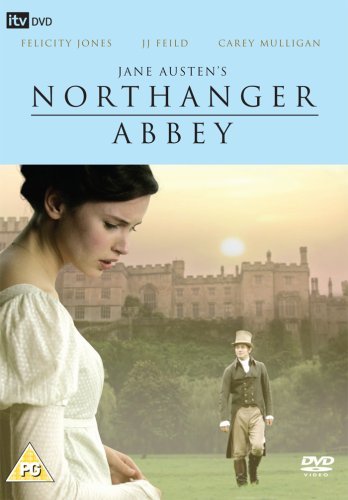
Northanger Abbey by Jane Austen

Northanger Abbey was often published in the same volume as Persuasion, both being the final novels of Austen. It’s a self-referential Gothic novel starring a Gothic fiction obsessed Catherine Morland who goes to Bath for social engagements and ends up staying with some friends in the big gloomy estate Northanger Abbey. Catherine is convinced that Northanger Abbey, like her favourite book The Mysteries of Udolpho, contains some wickedly gothic elements, such as a wife murdered by her husband and unburied, and a mysterious room with secrets in it as well.

It’s all in her head. But considering Northanger Abbey was written in 1799 and published (posthumously) in 1817, it was ahead of its time by really spoofing the other Gothic novels of the same era.

Catherine is initially naive, with an over-active imagination, and she is completely ignorant of other’s malignant intentions. However, she is also sweet, insightful, and funny. Stylised as a heroine from the outset, she eventually grows into the role – not because she is trapped in a Gothic novel, as she would love to believe, but through a complication of errors and manners that lead her to grow into herself as she experiences the outside world. Even though the novel is so old, I really found it easy to identify with Catherine: she seemed very real to me, and very modern.

The novel surprised me because it was styling itself as a Gothic novel (through Catherine’s narrative, not though Austen herself) and it’s really a parody of other famous works, often mentioning them in the text. I really, really enjoyed this book – but it should only be read if other Gothic novels of the time have already been read, otherwise all the references and themes and allegorical wit won’t make this book very enjoyable. I suppose it was one of the first meta-narratives in literature. That’s just totally awesome.


Note – Northanger Abbey seems to have inspired Ian McEwan‘s famous novel and film adaptation, Atonement. Both novels have a protagonist with an over-active imagination, who causes havoc around her because of her belief and desire for real life to be like in fiction.

30 Day Book Challenge: Day Two

Day Two: Your Least Favourite Book

Professor Midnight by Lynn Santa and Peter Andrew Wright

This is simply the worst book I have ever read. I wrote a review for it and posted it under a different name on Amazon in 2006. The other reviewers seemed to have read a different book, for they all gave it 5 stars. Anyway, here we go:

Although the author is credited as doing in-depth research for this novel, it is nothing that anyone with a passing interest in Wiccan, genetic, religious, historical, or political practices would know. The story seems more like a justification for writing sex scenes that reflect an old man’s sexual fantasies rather than a really coherent story. And was there even an editor? There is punctuation and basic spelling mistakes that make it seem like it was written by a teenager – how did they miss them?!. The references to Leonardo Da Vinci‘s Codes seem to me as simply jumping on the bandwagon and taking advantage of the phenomenal reception of the Dan Brown book.
This story did not flow well but was jerky and dysfunctional, especially when it came to spoken dialogue, unspoken or implied dialogue, and characterisation. It was like the author did not know what to mention and what to exclude as a summary. The inclusion of large-scale events such as the Academy Awards and visiting the Amazon Jungle was probably mentioned in the vain hope that an eventual movie adaptation would have stunning scenery. It seems like this was the first draft of a promising novel, accidentally sent to publishers instead of the final result.
Of the many times I put this book down in disgust, or laughed out loud at the pretentious statements, I picked it back up again in the vain hope it would get better, or that I would finish it and publish a truthful review. Avoid at all costs!

I’d also like to mention that the main character is a cross between the Phantom of the Opera and Casanova. It’s awkward, ugly, and a little wrong. There is so much MORE I could say about why I hate this book, but I will hope you can take my review (which is most certainly NOT personal, but completely objective) as a warning to avoid it.

30 Day Book Challenge: Day One

Day One: Your Favourite Book

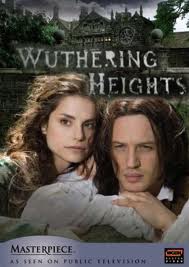
Wuthering Heights by Emily Bronte, 1847.

I love the flaws in this book: passion, the selfishness, the grief of the main characters. I love that it’s set in a very small location over a few generations – it’s a family epic, and I love that. I love that it’s told from multiple points of view (narration within narration within narration) which is pretty awesome for a book written in 1847.

This picture is from the 2009 BBC miniseries, which I think was a gorgeous adaptation.

Childfree By Choice – Does It Make Her Less Feminine?

At the risk of revealing too many spoilers, I feel the need to talk about something very close to my heart.

In February, an ex Australian politician declared that “Anybody that chooses a life without children cannot have much love in them.” He was having a go at Australia’s currently childless female Prime Minister.

This disgusts me for a number of reasons, and least of all being the fact that men in politics often have wives to look after their children, but as primary caregiver, working women need wives themselves as their husbands work, or maybe they’re SHOCKINGLY unmarried (as with Prime Minister Gillard, who openly says that she chose not to have children to further her career).

But I don’t really want to talk too much about childlessness in modern-day society, even if it does prove that the specific ex-politician in question relegates women to roles as wives and mothers. As if they can’t possibly be wonderful people without dedicating their lives to raising children – and ignoring the fact that mothers and fathers interact differently with their children.

If you’re not sure what I mean, let me elaborate: in pretty much every nuclear family circumstance, a mother spends more time with her young children than a father. A father comes home from work and has fun with his children, so children will see the father as the sometimes-present disciplinarian. Whereas a mother is more constantly available, and when the child is sick they will want only their mother as nurse.

If you’re going to argue with the above statement, don’t bother. I’ll just delete it. I know what I’m talking about: I have a degree in sociology and gender studies. I know it doesn’t apply to EVERY situation: I’m talking in general terms for nuclear families.

My sci-fi novel, The Edge of Darkness contains pregnancy. It’s integral to plot, so I don’t mind giving that away. There is no contraception available in my novel. My main character, Max, never deliberately tries to get pregnant, but once she is, she decides that she wants to keep the baby. Max is a cyborg, and in her society, babies are taken away from their cyborg mothers: cyborgs as relegated as second-class citizens, only half-human, and therefore unable to raise a baby.

We see the world through Max’s eyes. We know that she’s more than capable of raising a child whether she’s a cyborg or not, whether she has a partner or not. Max’s femininity is never questioned. She never wanted a baby, but that doesn’t mean she’s a wooden, loveless person. Her love for her people resounds throughout the novel.

But what if one of my characters chooses not to have children? What if she decides, for whatever reason, to prevent a pregnancy? Or even to SHOCKINGLY abort?

That doesn’t mean she has any less love in her, any less ability to love. Often the decisions on why to have children are more selfish than the reasons a couple will choose not to – check out Childree.net for more information that I can’t be bothered rewriting. Choosing to be childfree is an option granted to modern day women and attempts to force other people not to relegate them into the position of mother or woman when they are so much more than just those two roles.

They are so much more than just babymakers and nurturers. Women exist for other reasons than to provide the next generation.

My women are main characters, driving forces behind their stories. Their decisions directly impact the plot, and grant them bragging rights of being active, not passive. I feel this is a very important view to take, as far too many novels nowadays are claiming strong, independent young women as protagonists, yet these women only ever react to things happening to them, and often are victims of circumstance. They fit much more easily into the typical ‘women as nurterers’ – they need rescuing by a man. What if there were more stories out there where the big tough man needs rescuing by a woman*? A woman who is still feminine, but knows how to kick butt?

How cool would that be?

*Yes, that was a spoiler, but I won’t say for which novel…

So many choices

So today I have three four five options.

  1. Write some more of Chasing Liberty.
  2. Write some more of the half-planned Dreamwalker (sequel to Dadewalker)
  3. Edit the shit out of Dadewalker’s electronic copy.
  4. Edit the shit out of The Edge of Darkness’ hard copy.
  5. Play Pokemon.

Guess which one I’m doing?